Showing posts with label Martha Nichols. Show all posts

Thursday, June 7, 2012

Adopt-a-tude Says a Fond Goodbye

Well, the time has come for AAT editors and writers to admit to reality: We're busy! Raising kids, working jobs, doing other writing, moving on. After this entry, we'll no longer be posting on AAT.

When I began Adopt-a-tude a few years ago, it was an experiment in group blogging, one that did take off for awhile, possibly because of the sparks flying in the adoption community at the time. The sparks are still flying, of course, but the public discussion of adoption has shifted, too.

I wouldn't say that the cultural "moment" for adoption has passed. But it's no longer big news that many adoptees are determined to get access to their birth records—or that international adoption doesn't always have a happy ending. The increasingly nuanced depictions of adoption in movies and TV means that at least a few consciousnesses have been raised. May we all continue to raise awareness about adoption issues that matter to our families.

I'm currently Editor in Chief of Talking Writing, an online literary magazine, and I'm very open to publishing high-quality personal essays or fiction about adoption. Please check out TW's Submissions page for more information. Fran Cronin, AAT's blog manager, is also a columnist at the magazine and often touches on her experience as an adoptive mom.

So come follow us at Talking Writing, "like" us on TW's Facebook page, and sign up for a free TW subscription. And regardless, thanks for supporting Adopt-a-tude.

All our best wishes to you and your families!

Martha Nichols, founder of Adopt-a-tude

For those who missed it, here's the contents for TW's adoption spotlight last November...


Spotlight: Adoption and Parenting

Celebrate National Adoption Month with TW in November

Melissa Fay Greene
Author Note: Melissa Fay Greene
Two personal takes on No Biking in the House Without a Helmet, Greene's 2011 memoir about her nine children


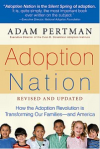
Interview: Adam Pertman
One of adoption's staunchest supporters talks about the latest challenges—and Steve Jobs


Personal Essay
A mixed-race adoptee reflects on the need to create himself

Mei-Ling Hopgood
Mei-Ling Hopgood

Interview: Mei-Ling Hopgood
The author of the acclaimed memoir Lucky Girl has a new book on the way about cross-cultural parenting practices


Thursday, October 27, 2011

Adoption on TV: "Modern Family" or "Parenthood"?

By Martha Nichols for Adopt-a-tude


A gay dad sits at the dining-room table, making a scrapbook about baby Lily's adoption. A tiny conical hat perches on his head. It's all the funnier because this dad—ex-college-football player Cameron—is so large.
"Look at this." Cameron reverently holds up the hat.

"Oh my God!" cries Mitchell, his partner. "Lily's little hat that we bought her at the airport in Vietnam!"

Cameron puts it on, its red ribbons trailing beside his cheeks.

Mitchell eyes him. "Remember how cute she looked in that?"

"Remember how I used to wear it and walk around and act like I had a giant head?" Cameron giggles.

"That was good acting," Mitchell says.

Politically incorrect? Over-the-top satire? Yes on both counts, but that's why a sharply written sitcom like ABC's Modern Family gets at the uncomfortable  aspects of adoption—especially for us white middle-class adoptive parents.

In many ways, Cam (Eric Stonestreet) and Mitchell (Jesse Tyler Ferguson) are the fruitiest of gay stereotypes, but the hat episide of Modern Family that aired last spring ("Two Monkeys and a Panda"), veered plenty close to my own adoptive family. My Vietnamese adoptee is older than Lily—and he's not been slapped with an Asian flower name—but he's got his own tiny conical hat.

It's taken me awhile to appreciate Modern Family, so I'm only now watching Season Two on DVD; the show is currently in its third season. But I'm up to date with another show also in its third season—NBC's Parenthood—and lately I've been struck by the contrast between the two when it comes to adoption.

I used to enjoy Parenthood, even when this drama about the Braverman family in Berkeley, California, slopped into preciousness. Zeek (Craig T. Nelson) and Camille (Bonnie Bedelia) Braverman oversee the clan from an artsy Berkeley house that's probably just up the hill from Chez Panisse. The four adult Braverman children are by turns believably angst-ridden and annoying. But their kids make the show engaging. And the evolving story of young Max, diagnosed with Asperger's Syndrome in Season One, is notable for its unvarnished look at how hard this can be on a family.

Yet, the current story involving the quest of Julia Braverman-Graham (Erika Christensen) to adopt a baby is not only an inaccurate portrayal of the ups and downs of the adoption process. It leans heavily on a heroic adoption narrative—just the sort of thing Modern Family skewers brilliantly.

The basic narrative goes like so: Two prospective adoptive parents, after battling with infertility, deeply long for a child. They have plenty of money, a huge extended family, a homey house. Meanwhile, the pregnant birthmother is destitute, without family, friends, or the child's birthfather. She struggles mightily over whether to give up her baby for adoption, but when she decides to do so, the music swells. She tearfully surrenders her infant. The End.

In Parenthood's version of this cliché, Julia and her husband Joel (Sam Jaeger) have a biological daughter, but Julia can't get pregnant again. They decide to adopt, and Julia, a high-powered lawyer, flings herself into the bureaucracy of private domestic adoption. Before you can say "adoption agency," she's frustrated. She can't just make it happen by writing a check.

This isn't what bothers me about the story, though. On many levels, adoption is a financial transaction. Julia's chop-chop way of going about it is true to her character. One of her brothers even says she's trying to "buy" a kid. To whit: In the September episode "Hey, If You're Not Using That Baby," a young woman named Zoe (Rosa Salazar) conveniently turns up pregnant and ready to get rid of "it." Zoe runs the coffee cart at Julia's law firm, and Julia shadows her like a vulture. Before long, she asks Zoe flat out if she can have her baby.

It's improbable soap opera, but I like Julia's upper-middle-class myopia. I like the fact that Zoe, who's attractive and bright, responds, "Um, no."

But here's what I don't like: In under a month of TV air time, Julia has become a saint. She's apologized to Zoe. In a recent episode, Julia takes her to the hospital when she feels ill, then brings Zoe home for the night. In Julia's fancy kitchen, the unhappy pregnant girl gets to observe perfect-dad Joel playing with their daughter. Soon after, Zoe shows up on their doorstep again, saying, "If you still want to have my baby, you can have it. You have a nice family."

On Parenthood, it's all hugs and tears—though maybe not The End, because the adoption plot is still unfolding. Maybe once Zoe has her baby, she'll change her mind. And if the adoption does go through, maybe it will be an open one in which Zoe remains part of the Braverman saga. Wouldn't that be cool?

The run-up isn't promising, however. I can just picture the Braverman clan rallying around the new adoptive parents after a few predictable twists. For example: Zoe almost revokes her consent; her ne'r-do-well boyfriend shows up and tries to stake his own claim; the baby is born with a disability—but saint-like Julia and Joel love the child anyway.

If only adoption were being handled as realistically on Parenthood as autism is. The heroic baby hand-off is never the end, as many real birthparents and adult adoptees will tell you. Even the broad satire of Modern Family, which portrays only the adoptive parents' point of view, gets across how much these gay dads have changed over the months they've been parenting.

With Parenthood, there's reason to hope that the ensuing adoption complications may yet rise above clichés. I'm drawn to the Bravermans, a big happy clan, TV fantasy though they are. I long for a form of community my own tiny family of three doesn't have.

But when a drama like this strikes too many false notes, I end up feeling manipulated. As someone who grew up in a working-class suburb south of Berkeley in the same era, it's already tough for me to suspend disbelief. I know how much the Bravermans reek of a particular kind of groovy privilege.

Most TV families—and Modern Family is no exception—are middle-class and inwardly focused, and they generate an ever-expanding tangle of unrealistic plotlines. But if the characters expose all their nasty, unpretty edges, I stay hooked. That's especially true for an adoption story, which is why I've grown fond of those argumentative, accessorizing gay adoptive dads.

Their comic outrageousness—and obvious self-deceptions—cut far closer to the truth than a thinly disguised melodrama with a pretty soundtrack.


Links to Episodes:
"Two Monkeys and a Panda" (Modern Family, aired March 2, 2011)
•  "Hey, If You're Not Using That Baby" (Parenthood, aired September 20, 2011)
"Nora" (Parenthood, aired October  11, 2011)

Wednesday, April 6, 2011

You Do Not Know My Family

By Martha Nichols


The Ethics of Adoption Writing


When my husband and I adopted a baby son in Vietnam in 2002, I never imagined I’d have to explain to our little boy eight years later why another adoptive mother had returned a child. But last April, that’s exactly where I found myself, along with everyone else who watched the sad saga of seven-year-old Artyom Savelyev unfold.

In early April 2010, Artyom was put on an airplane alone by his American adoptive grandmother and flown back to Moscow. He was accompanied only by a note written by his adoptive mother Torry Hansen, a single nurse in Shelbyville, Tennessee.

According to the Associated Press, the note said that she’d been lied to in Russia about the boy’s difficulties: “After giving my best to this child, I am sorry to say that for the safety of my family, friends, and myself, I no longer wish to parent this child.”

The why of a news story like this will always hook us. But as an adoptive parent and writer, it’s become a far more intimate ethical struggle for me.

Within days, I had written an Artyom commentary that appeared on the cover of Salon: “Adoption Fearmongers Take Over.” My focus was on the sensationalized news coverage, including a Nightline report about “the inside stories of adoptions that go horribly wrong.” Yet as the week of Artyom stories roared on, other adoptive parents began confessing their difficulties with problem adoptees, often in specific detail and splashed all over NPR, national TV, and the Internet.

It’s an old conundrum of memoir writing: What right does an author have to reveal private details about the lives of other family members—especially their children? My standard for writing autobiographical nonfiction has long been that I must make myself more vulnerable in print than any relative or friend I write about. So far, I believe I’ve hewed to the ethical side of this personal contract.

But it’s also true that a year after Artyom’s flight back to Russia, I’m doing less writing about my son—or, to be scrupulously accurate, the nature of my writing about him has changed. His views of adoption, in particular, do not seem mine to share...

CLICK HERE TO READ MORE


Editor's Note: The full text of this piece appears in the April 2011 issue of Talking Writing, in which the theme is "Too Much Truth? The Ethics of Memoir Writing."

Wednesday, July 14, 2010

Aimee Louise Sword and the Press: "Rape" vs. a "Summer Romance"

By Martha Nichols for Adopt-a-tude


Try googling “Aimee Louise Sword.” The top hit is a compilation of news stories and commentaries about Sword pleading guilty this week to having sex with her 14-year-old birth son. At the moment, there are "533 related articles.

Yet one of the other top hits will be a ten-month-old story from the Huffington Post, complete with an embedded Fox News video: “Aimee Louise Sword Raped Son She Gave Up For Adoption.” A hit of the same vintage from ABC News opens this way: “A Michigan mother is facing a trial after being accused of having a summer romance with the teenage son she gave up for adoption.”

Unusual and disturbing as this story was when it broke in September 2009, there’s a big leap between rape and summer romance.

Let me be clear: Sexual abuse is never OK. Because parents have the power in a relationship, they are always at fault. Yet there are tricky angles on this story. Sword was not raising this boy in the caregiving sense. She claims to have initiated contact with him through Facebook only after she stopped hearing from his adoptive parents. What happened is repellant; it also pushes all the wrong buttons, just as so many stories about adoptions gone terribly awry do.

Last year, I wrote about the online response to Sword's arrest (click here). The story swirled through the blogosphere with a wild array of facts; some reports said her son was only 10 years old. Most said little about his adoptive parents. While the original news story from the Oakland Press in the Detroit area was a standard journalistic account, almost none of the subsequent commentaries paused to question why Sword might have done what she did.

A "MILF" in her mid-thirties, Sword has become both a pariah and an object of prurient interest. Her MySpace photos still appear all over the Internet. She's also been married and has five other children.

Advocates for birth mothers—or adoption in general—are not shaping this discussion, and that's a bad thing. Some recent media commentaries, like Tracy Clark-Flory's piece in Salon, have at least addressed the fact that reunions between birth parents and children can be fraught with all sorts of intense emotions. The UPI account includes a quote from Sword at her sentencing: "I am remorseful for everything that occurred."

But then we get all the ugliness oozing up through the cracks. A quick review of recent online headlines gives us, among others "INCEST MUM" and "Yummy Mummy Heads for Jaily Waily."

Now she's been sentenced to jail for at least nine years. More facts are on the record, although Sword herself admitted in court that she still doesn't know how it happened. It's not at all clear that she "tracked" or "stalked" her son on the Internet. The UPI story notes in passing that the prosecutor (not Sword's lawyer) said "it was the son who got in touch with her."

Last September, the site You Can't Make This Up did stick up for Sword, noting that a social worker representing her son's adoptive family “asked his permission to find her, because he was getting unmanageable at home….” In this version, he’s a “gangbanger” who may have coerced his birth mother into having sex. She supposedly complied “partly due to guilt, partly out of fear of losing contact with her son forever and last but not least, partly because she was asked by his adoptive parents…[to help].”

Again, we don't know. Some of this doesn't square with reports from her sentencing this week. Although this unfictional.com story is one of the top hits for Aimee Louise Sword, its sources aren't clear.

So we are left with all the scary stereotypes about what happens to adoptees: the son is either a victim raped by a depraved, sexually loose birth mother or an irredeemable gangbanger. There's way too much heat and no light.

We humans will always be compelled by this kind of sensationalism. But the first kneejerk responses linger online in a way they didn't used to. They continue to float before readers' eyes, courtesy of Google, all those 530-plus headlines that trumpet some variation of "guilt" and "sex" and "mom."

I hate it all—what Aimee Sword did and the feeding frenzy that's followed.


This piece also appears in Martha's blog on Open Salon.

Monday, July 12, 2010

Podcast on "What's My Heritage?" and Other Adoption Topics

By Martha Nichols for Adopt-a-tude


Today I was interviewed by Mary Beth Wells on "Adoption—Journey to Motherhood." We talked about Artyom, the adoptee who was sent back to Russia this past spring—what Mary Beth termed the issue of "good child-bad child"—and also the push-and-pull of culture-keeping with international adoptees, based on "What's My Heritage?", my article in Brain, Child magazine last year.

It was a wide-ranging conversation. To listen in, click here (it's the July 12, 2010 show). You can also download it for free.

And for those who can't get enough of The Last Airbender, click here for my review. I finally watched the thing with my son and assorted children and adults last Friday. Lord have mercy. A preview:
"I left the theater feeling jangled, as if somebody had spit up on me. As one of my fellow adult sufferers, a scriptwriter, described the waterbending special effects: 'Yuk. Death by spit and icicles...'"

Wednesday, June 30, 2010

"The Last Airbender": Do We Take Our Kids?

By Martha Nichols for Adopt-a-tude


As I watched the trailer last weekend for The Last Airbender with three eight-year-olds, two of whom were Asian adoptees, I knew I was doomed. Even as they hissed at each other that Aang's tattoo was wrong—where's the blue arrow??—they were hooked by the special effects, just as they were meant to be.

M. Night Shyamalan's summer action extravaganza is set to open July 1, gunning for a big holiday weekend. The first review I read this morning was in the Boston Globe, and others are popping up online as I type. What's the initial verdict? Ty Burr of the Globe writes:
"The Last Airbender is dreadful, an incomprehensible fantasy-action epic.... The film probably should have stayed a cartoon; live-action kills it dead."
I should be doing a gleeful air-dance like twelve-year-old Aang, the movie's namesake and Dalai-lama stand-in. In Salon and elsewhere, I've been writing for months about the casting controversy—three of the four main characters from the anime-inspired Nickelodeon cartoon series are played by white actors in Shyamalan's movie—as have many Asian-American activists, including cartoonists like Gene Yang.

Today Roger Ebert tweeted a link to what he calls "The best writing I've seen on the racist casting of 'The Last Airbender.' Devastating." It's by Vietnamese blogger Q. Le at Floating World.

We should feel vindicated.

Well, of course I do. It seems that Shyamalan's auteurish blindness about casting white actors in Asian roles represents benighted moviemaking throughout. Burr says of Nicola Peltz and Jackson Rathbone, who play the brother-sister heroes Katara and Sokka, that their "crime, again, isn't that they are Anglo but just painfully dull."

Here's the thing: My son—an adoptee born in Vietnam—broke into tears two weeks ago when he thought I was going to forbid him to see the movie. He knows I've been railing in print against the racism implicit in the casting, so he assumed he'd be sitting at home while his friends all streamed to the theater and Airbender parties.

This is one of those unlovely damned-if-you-do-damned-if-you-don't, white-adoptive-parents-trying-to-be PC quandaries.

I assured him he could see it if he wanted to; that anything else would be unfair. I have strong opinions about it, I told him earnestly, but they don't have to be your opinions. It's OK, it's OK, it's OK.

No, it's not.

In fact, I wonder what his opinion will be. We'll do our best to boycott the film this opening weekend—Racebending.com activists and others are calling for a boycott of at least the first two weeks in order to put a dent in Airbender's take—but I doubt we'll make it past July 4, considering that he wants to go with friends.

Or as my husband wryly put it this morning, "If it's a real dog, we better not wait more than one weekend."

Here's the other thing, though: It won't just be a matter of suffering through a reeking mess for two hours. The main media spin will be the trials of M. Night Shyamalan—so gifted! so much potential!—what curse is the great director suffering under?

Burr's review begins like so: "The Last Airbender has had more bad karma than almost any movie deserves." He details its "litany of disasters," from the cartoon's main title (Avatar) being ripped off by James Cameron to pissed-off fans to the last-minute 3-D forced on the film to the director's string of flops. Burr notes that it would have been great if Shyamalan had overcome the odds, perhaps like young Aang himself, to produce a winner.

Scott Mendelson writes in his Huffington Post review, "As a film from the man who once wrote and directed such films as The Sixth Sense and Unbreakable, it is a heartbreaking tragedy, a 'sign' that perhaps the once-great M. Night Shyamalan is truly 'broken'."

So Shyamalan the Fallen looks like the main review focus, rather than the persistent whitewashing of Hollywood films. I confess to my own secret hope that The Last Airbender would be good, even awe-inspiring. At least then my Asian son and I—not to mention other parents and fans of all races and creeds, adoptive or bio—could have had a real discussion about whether casting decisions should reflect the racial and cultural referents of source material.

If Peltz, for example, had turned out to be a great Katara, then I'd be willing to eat a few words. But given that it sounds like "great" doesn't describe anything here—as Christopher Kelly ends his review in the Miami Herald, "It's a little early to be saying this, but I'd wager good money that you won't see a worse movie this year"—I'm left with the utter cluelessness and cynicism of Hollywood. Of the lousy 3-D, Burr of the Globe writes, "I've got winking-Jesus postcards that look better."

Which means The Last Airbender deserves every bit of its rotten karma. I'd lead with "One bad decision begets another...and another...and another."

Like Fire Lord Ozai and his evil daughter Azula, give me some real opposition, please. Otherwise, where's the fun?

The best outcome may be that a few of the money-people behind movies wake up. When I watched the trailer with my son and his friends last weekend, we were in a theater to see the re-make of The Karate Kid—a movie with people of color in all the main roles.

My advice? Despite the postcard-romantic scenes of China in the new Kid, it had a lot to offer my kid. If you can avoid the Airbender juggernaut, don't let it give Jackie Chan a run for your money.


This is a revision of a post that also appears on Open Salon.

Monday, May 3, 2010

Harry Potter and the Chamber of Adoption Secrets

By Martha Nichols for Adopt-a-tude


Since the late 1990s, most parents in the English-speaking world (and by now, far beyond) have met Harry Potter.

At least ten years ago, before my adopted son entered our lives, I read the first book in the series—Harry Potter and the Sorcerer's Stone—just to see what all the fuss was about. I enjoyed it. But I decided to wait to read the rest of the books until my own child came along and was of an age when we could go through them together.

Now my eight-year-old son is ready to jump in, and we've begun the great Harry Potter reading marathon. But revisiting the first book has confronted me with a familiar challenge: How much should I protect my son from negative images of adoption and orphans—and how much, in general, should I censor his access to popular culture?

Harry is not strictly an adoptee; he's the poor orphan, fostered and mistreated by his remaining biological ( or "Muggle") relations. But there's much in his story that real-world adoptees will recognize.

Early on in The Sorcerer's Stone, for example, his aunt lies to him, saying his parents died in a "car crash." Harry learns "the first rule for a quiet life": "Don't ask questions."

My son is still young for reading these books. More to the point, he doesn't want to read them by himself. If he had his druthers, he'd just watch the movies. But I want to slow this process down. I figure that if we read through the books before he sees each movie, then he'll be older as the series proceeds and becomes more disturbing.

He's predictably hooked on The Sorcerer's Stone. We're halfway through after a few days. But the first night, he also had nightmares.

It's not that I was clueless about the orphan theme when I originally read this book. Yet now I'm seeing it through my son's eyes—and author J.K. Rowling's handling of this standard plot device seems deeply satirical—and wonderfully unvarnished—and also unexamined.

Whether that lack of examination is a problem is the question. Ultimately, I don't think so, but I've been doing some pondering as we race through the chapters, and Harry is confronted with one secret after another about who he really is.

This past weekend, I had a bit of an "ah-ha" moment when I attended an academic conference at MIT put on by the Alliance for the Study of Adoption and Culture. The topic was "Adoption: Secret Histories, Public Policies." An array of historians, social scientists, memoir and fiction writers, and documentary filmmakers were on hand. (Click here for the program and participants. It was a terrific conference.)

Of many fascinating sessions I went to, "Adoption in Film," with panelists Kim Park Nelson (a multicultural studies scholar) and Joyce Maguire Pavao (a well-known clinician), had me leaping back to Harry. The Harry Potter movies figured in neither of the panelist's presentations, yet his orphan status is connected to their discussions.

Kim Park Nelson's topic was "The Horror of Adoption," in which she detailed pernicious images in some recent horror films that involve an adoption premise. She didn't focus on more well-known fiascoes like last year's Orphan, which generated a letter-writing protest campaign, but on genre movies like The Ring and Silent Hill.

In her analysis of these films, adoptees are either bad seeds or shattered beings trapped between their good and evil selves. Birthparents are evil incarnate or victims of fate. Indeed, almost anyone connected to the triad seems to be a victim of fate, driven to discover the horrible secret of a child's identity. Adoptive parents are victims, too, walking into danger to save their kids.

Compare this with Harry Potter, who begins not knowing he's a wizard and certainly has to grapple with his fate but is allowed an active part in the process. For example, when students first arrive at the Hogwarts School of Witchcraft and Wizardry, they're "sorted" into houses (dormitories) in front of everyone. They put a sorting hat on their heads. Here's an except from The Sorcerer's Stone:
"The last thing Harry saw before the hat dropped over his eyes was the hall full of people craning to get a good look at him. Next second he was looking at the black inside of the hat. He waited.

"'Hmm,' said a small voice inside his ear. 'Difficult. Very difficult. Plenty of courage, I see. Not a bad mind, either. There's talent, oh my goodness, yes—and a nice thirst to prove yourself, now that's interesting.... So where shall I put you?'

"Harry gripped the edges of the stool and thought Not Slytherin, not Slytherin.

"'Not Slytherin, eh?' said the small voice. 'Are you sure? You could be great, you know, it's all here in your head, and Slytherin will help you on the way to greatness, no doubt about that—no? Well, if you're sure—better be GRYFFINDOR!'"
Rather than horror films, Pavao focused on a list of her ten favorite movies in which adoption is part of the storyline.* She noted that orphans appear in many children's stories and movies because the experience of family loss can feel so universal. Readers and viewers identify with such loneliness.

But I think orphans also serve a basic story function. From the Boxcar Children to Harry Potter, kids without parents are the protagonists. A few reassuring adults may pop in, but the kids get to have adventures. Harry does come to terms with his birthright as a wizard, but his actions very much determine the story. He is not acted on in the same way as the helpless bad seeds of those horror movies.

It's a compelling image: a lonely orphan, who feels different from all the Muggles around him, learning he has power within. Harry Potter confronts many barriers in discovering his birth history—just as adoptees do—but he always feels he has a right to do so.

At past non-academic adoption conferences, I've gone to sessions in which speakers talk about which books are "good" or "bad" for young adoptees. I've bristled at the censorship implied.

While I may cringe at the image of Harry stuck in a cupboard in his aunt and uncle's house, and while my son may ask how they could treat him that way, I think talking about our responses can be more illuminating than any spoon-fed message.

I suggest another test: Are the main characters of a story or movie in charge of their own fates? Are they determined to learn the truth?

If yes, then let the Muggles parade and stinking potions brew, the secrets revealed may well be magic.

*A Few of Joyce Maguire Pavao's Top Adoption Movies
  • "The Miracle"
  • "High Tide"
  • "The Official Story"
  • "Coco"
  • "Second Best"
  • "Catfish and Blackbean Sauce"
As presented May 1, 2010, "Adoption in Film," at the conference organized by the Alliance for the Study of Adoption and Culture

    Sunday, April 11, 2010

    Russian Adoptions: Who's at Fault and What Do We Do?

    By Martha Nichols for Adopt-a-tude


    When I first saw the pictures of seven-year-old Artyom Savelyev—who is close to my son’s age—in Moscow, after his adoptive grandmother put him on a flight from Washington, D.C., by himself, I wondered what the hell is wrong with us.

    Who is “us”? That’s the question. American adoptive parents? Not most of us, by any stretch. The American adoption agency involved, which has now had its license suspended by the Russian education ministry? Again, that’s painting with a broad brush. The Russian orphanage in which by some reports the boy was mistreated? Who knows?

    I wanted to blame somebody, though, as did the many commenters on news stories and blogs about Artyom’s fate this past weekend. Adoptive mother Torry Hansen and grandmother Nancy were right at hand, courtesy of the AP. Here are a few comments about the story from Lisa Belkin’s Motherlode blog:
    “This is totally unconscionable and irresponsible.”
    “This woman's (I cannot say—‘mother's,’ for she doesn't deserve such a title) behaviour is despicable.”
    “This article made me cry. It takes the patience and endurance of Mother Theresa to deal with special needs children. Where did this woman not understand the commitment to a young, troubled child that she adopted into her family?”
    Last week, Nancy Hansen decided to fly Artyom (called Justin by his adoptive family) back to Russia because his violent behavior had become too much for them. According to one of the AP stories, his grandmother “chronicled a list of problems: hitting, screaming and spitting at his mother and threatening to kill family members.” He apparently slammed one aunt with a statue when she pushed him to do math homework. (The family was home schooling him.) Hansen says he threatened to burn their home down.

    Back in Russia, he was accompanied by a note from adoptive mother Torry Hansen, who is a registered nurse: “This child is mentally unstable. He is violent and has severe psychopathic issues…I was lied to and misled by the Russian Orphanage workers and director regarding his mental stability and other issues…. After giving my best to this child, I am sorry to say that for the safety of my family, friends, and myself, I no longer wish to parent this child.''

    As of Friday, Russian foreign minister Sergey Lavrov was threatening to suspend all U.S. adoptions, calling this “the last straw.”

    Grandmother Nancy says she had no idea she was setting off an international incident. She did tell an AP reporter, "The intent of my daughter was to have a family and the intent of my whole family was to love that child."

    I hate stories like this, in which a child becomes abandoned over and over again, unwanted by anyone. I hate what this does to me as an adoptive parent of a son born in Vietnam, of the doubts I start to feel about whether I had any right to everything that my family means.

    I’m also waiting for more facts. The problem, as usual, is that a media storm has managed to make the situation even murkier, spreading an array of misinformation about international adoption, attachment disorders, and what constitutes “normal.”

    Shocking headlines like “Boy from Russia said ‘he’d torch our home’” and “Grandmother: Boy terrified adoptive kin” keep the focus on extreme behavior. Here’s the blurb that introduces the AP report in the Seattle Times: “Torry Hansen was so eager to become a mother that she adopted an older child from a foreign country, two factors that scare off many prospective parents. Her fear came later.”

    A distorted look at “the inside story of adoptions that go horribly wrong” aired on ABC's Nightline Friday, including videos taken by parents of children having “meltdowns.” (Click here for the accompanying article.)

    This prompted developmental psychologist Jean Mercer to debunk some myths in a Psychology Today blog. She rightly castigates Nightline for running home videos without questioning the parents’ interpretations. In one case, shortly after a pair of Russian sisters had been adopted, the older sister wanders around her American home in tears, clutching a blanket, and crawling under furniture. Mercer notes,
    “[T]he parents seem to have regarded it as such bizarre and unacceptable behavior that it needed to be recorded because no outsider would believe it.
    “But what do we actually see in this video of a child who has been in the adoptive home for about a week? Let me just inquire how similar it might be to your own behavior, if you had been taken by very large people who spoke a different language, put on an airplane with little comprehensible explanation, and taken far away to a new house, new food, new ways of doing things? Would you be grateful?”
    Meanwhile, it’s important to keep the numbers in perspective. According to the U.S. State Department, there have been about 15,000 U.S.-Russia adoptions in the past five years. I’ve heard that in the last fifteen years, it’s about 50,000. As many adoption experts have noted, most of these don’t go “horribly wrong.”

    Whether Artyom is really psychopathic and violent is unclear. Even if it were true, shoving him onto airplane is at the very least an act of ignorant desperation. Giving him an American name when he was already six years old indicates a lack of awareness and empathy. The Hansens—not to mention those parents supplying videos of their children for Nightline—appear to have little understanding of what it means to suddenly land in another culture.

    Yet something much larger is at play than the actions of two unfit adoptive family members. Based on the official outrage of Russia—following on the travesty of American missionaries trying to hustle Haitian “orphans” out of that country after the recent earthquake—the practice of international adoption is once again under fire.

    There are lots of ethical reasons why it should be. In Haiti, a number of the children involved still had biological parents. In many other developing countries, from Vietnam to Ethiopia, there’s always been the risk of money paid for babies to finance a less than savory adoption industry.

    Yet there’s the flip side, too, and you see it in Russia and Haiti: social welfare systems that simply are ill equipped and far too under-funded to support the rolls of abandoned children. What you see is poverty and its brutal impact on society’s most vulnerable: children who receive little or no adult care.

    Let me say it again: you see poverty, on a global scale, ramped up by the churn of developing economies. The Harvard University Project on Global Working Families, research that surveyed 55,000 people in a variety of countries and is detailed in Jody Heymann’s book Forgotten Families, makes clear that many children have no one to take care of them. Here’s a quote from my own 2007 review of Heymann’s book in Women’s Review of Books:
    “Of the working parents interviewed, nineteen percent in Vietnam left their children alone or in the care of an unpaid child; 27 percent did so in Mexico; and a whopping 48 percent did in Botswana, which has almost no publicly funded child care.”
    Even the reference in a USA Today story about Artyom—“United Airlines allows unaccompanied children as young as 5 years old on direct flights. Children age 8 and above can catch connecting flights, as well”—chills me.

    So maybe we should blame global capitalism and every one of us (that “us”) who participates. Maybe it’s not just the Hansens of Shelbyville, Tennessee. Maybe we should blame general ignorance about international adoption—for example, the various media commentators ranting about the numbers on the rise when in fact they’ve been in steep decline since 2004.

    Our son was a baby when we adopted him from Vietnam, from an orphanage in which he seemed very well treated by affectionate staff. He is now a happy and healthy little boy. I say this not to vaunt my own skills as a parent but to add that even my son, who remembers nothing of the orphanage—an orphanage that was far from a horror show—has occasional meltdowns. When he was just a little younger than Artyom, he would cry uncontrollably when I left him at school. My son still sucks his thumb, though he’s working on it.

    Loss experienced by young children can be profound and impossible to process rationally. The fact that my mother was hospitalized when I was six still sits in my soul. Sometimes I believe my own loss has helped me to understand my son’s; other times, I think that all humans walk alone.

    In my adoptive family, some days we walk in the light. We are together, we are whole. But have we really become a world in which so many children have no safe homes?

    Apparently so. At this moment, all I can do is hug my boy close.


    This piece also appears in Martha's Open Salon blog, Athena's Head.

    Saturday, February 27, 2010

    Haitian Adoptees: The Problem with "Why Not?"

    By Martha Nichols for Adopt-a-tude

    This is the third in a series of commentaries on Adopt-a-tude about Haitian orphans and international adoption. The press spotlight has been on ethical infractions, for very good reason. But now we have local news stories about U.S.-Haiti adoptions that have been completed successfully. The word "savior" is never mentioned, but that's where the focus seems to be—again.


    It's Saturday morning, and the Boston Globe has a beautiful, provoking, complicated photo above the fold on the front page. A dark-skinned girl with a purple headband and huge grin tackle-hugs a white woman with strawberry-blonde hair.

    They're sitting on an oriental rug that's covering a hard-wood floor. The caption: "Wislandie, an 8-year-old orphan from Haiti, is right at home with adoptive mother Beth Wescott of North Andover."

    I love this picture. As an adoptive mom myself, it's a relief after all the mug shots of misguided missionaries trying to smuggle children out of Haiti. In the video that accompanies the online version of the story, "A New Home for Wislandie," adoptive mom Beth gently rocks a little girl who is lively and mischievous but also clearly in need of comfort.

    Yet the Globe's photo spread, video, and story by Maria Sacchetti—"Joy, Frustration Brought Home"—raise big questions for me, too, because of all that isn't said or shown. This front-page feature, more than all the press about those criminally ignorant Baptists, exemplifies the cognitive dissonance that's part of transracial adoption.

    Why is the white-savior storyline so entrenched? And why is it so hard for the "objective" journalistic voice to talk about race?

    The racial difference of these Haitian adoptees and their adoptive parents isn't mentioned once in this story. Perhaps the photo and video are supposed to lay that issue on the table—and they do—but the story frame is the usual one of dedicated church members (Wislandie's adoptive father is a pastor) visiting Haitian children in a Christian orphanage in Port-au-Prince.

    To be fair to Wislandie's new parents and the orphanage (the Marion Austin Christian School) and this story, "about 10 Boston-area churches regularly send mission groups to help at the school," Sacchetti writes—and the connection prospective adoptive parents have formed with children apparently often goes back to when they were toddlers. Many of the prospective adoptees are in their teens.

    Before the earthquake, some adoptions were already in-process; according to the article, a few like Wislandie's have been successfully completely. But other potential adoptive parents and adoptees wait, mired in even more bureaucratic red tape, as conditions for the orphanage children worsen. (In this same issue of the Globe, the story above Sacchetti's, after the jump to page A8,  is headlined "Haiti Wants Refugees Back in Ravaged Areas.")

    As Massachusetts state rep Barry Finegold asks: "These children are never going to have families in Haiti, so why not try to bring them into loving families in Massachusetts?"

    Yes, why not? The rhetorical question rings true in the most immediate way for long-time orphans. Seventeen-year-old Auguste Joseph wants to join his frustrated adoptive parents in Ashby, Masschusetts. Like other kids in the orphanage wearing Red Sox T-shirts, Auguste is quoted as saying, "I'm dying to go.... I've been waiting for a long time."

    Why not?

    For many of us in the international adoption community—adoptees, adoptive parents, birth parents, and adoption workers—this question is far from simple, though. After "why not?",  I also wonder "what next?"

    There are hints of the dissonance to come in an evocative description at the end of the Globe feature: Wislandie is now wearing pink Crocs and has a bedroom of her own with heart-patterned wallpaper. "It is not an easy transition," Sacchetti writes; the girl's adoptive parents "look alternately joyful and exhausted."

    Most haunting: "Even though she has so much now, Wislandie insists on dividing every snack or sandwich, to give away half to her mother, father, or sister."

    The story then closes with her adoptive mom insisting—rightly—that her daughter isn't the only one who's lucked out.

    Yet this is really just the prologue. The rest of the real story, which varies with every transracial adoptee and his or her particular family circumstances, is full of complications of race and culture and loss that apparently can't be accommodated in a mainstream news feature.

    Here's where have I to ask: Why not? Why can't a daily paper like the Boston Globe, in a metropolitan area that includes a large Haitian immigrant population, tell this story as more than one white family's joy and the frustration of other waiting white families?

    At least one caller to a January 20 NPR show, "Where Will All the Haitian Orphans Go?", raised issues of cultural and homeland loss. These were treated seriously by Tom DiFilipo, president and CEO of the Joint Council on International Children's Services, the guest on this edition of Talk of the Nation.

    Other sources, such as the ColorLines' blog RaceWire, have grappled with the racial question of whites adopting Haitian orphans. And as one topic on the Haitian Internet Newsletter, "Haiti's Orphans, what are we going to do about it?", puts it:
    "Let me ask you a question:

    Do you really think that the rest of the world will just fly to Haiti and take all these Haitian kids into new homes somewhere outside of Haiti so they can live happily ever after?

    The orphan children of Haiti are Haiti's problem and now is the time to start talking about how we're going to deal with it.

    This is our country, these are our kids..."
    Discussions about race and culture and international adoption are all over the Internet and in various blog and editorial forms, even in mainstream-press outlets. But you wouldn't know it from this Globe feature about Wislandie.

    Interestingly, a number of the online comments to the story so far have been negative, pointing out snidely that there are American black kids waiting for adoption, too. That kind of knee-jerk response flips too far in the other direction, but it's obvious that readers and video-watchers are reacting immediately to the racial difference.

    You could argue that daily news features are really people stories. Americans adopting orphans from countries like Haiti or Vietnam (as in my own family) can surely be heart-warming.

    Simplifying the emotional storyline, however, by focusing only on getting home to America has political and social implications. It seems to deny that differences of race and culture matter. And I don't think daily news is off the hook for promulgating musty stereotypes—letting anonymous online commenters criticize or go out on a limb rather than reporting on what this white mother, for example, thinks about parenting a black child.

    Of course Wislandie is happy to be free of the current devastation in Port-au-Prince, where many families huddle under nothing but bedsheet tents as the rainy season approaches.

    Yet what will she think of her homeland as she gets older? Will she make connections with the local Haitian community in Boston and Cambridge? Will she keep speaking French and Creole? Will she realize that Haiti has a rich history and literature, a complicated history, that it is not just defined by poverty and disaster?

    That is the international adoptive parenting journey. It is very possible that Wislandie's adoptive mom and dad will help her along the way. In the video, Beth holds the girl close and talks realistically about adjustment challenges and the scene in Haiti.

    But not until I read more mainstream stories that dig into white adoptive parents talking about race—and not until I hear more about the links that could be forged between adoptees and the Haitian American community—will I believe that the discussion of international adoption has moved beyond saving those poor lucky kids from a place better left behind in the rubble.
    Monday, February 8, 2010

    Asian Adoptees, Anime Heroes, and the Racebending Controversy

    By Martha Nichols for Adopt-a-tude


    I began writing about the anime-inspired Avatar/Last Airbender cartoons in order to rave about how much everyone in my small family loves them. But I soon discovered that the live-action movie, directed by M. Night Shyamalan, has been cast with mostly white actors in the lead roles.

    The controversy has been brewing for awhile, but I'd like to alert other adoptive parents to this "racebending," as it's been called by Asian American critics, especially after a glitzy ad for the movie ran during the Super Bowl. Please take a look at Racebending.com for information about the movie protest.


    Who would have thought I’d develop a midlife crush on anime?

    It’s true that at a recent showing of the New England Anime Society I felt a hundred years older than the mostly male geek audience. I had to leave within five minutes, unable to sit through the dialogue.

    An approximation: “Look at his underpants!” “Ooh, he’s wearing underpants with a heart on them!” (Snigger, snigger.) “Careful, that girl on a bicycle has breasts.”

    I won’t claim cartoons like this grip me. I've never been a big animation fan. But The Last Airbender, the epic Nickelodeon series, exists on a different plane altogether.


    Whether it's My Neighbor Totoro, the kind of Japanese shorts I saw at the anime festival, or the American-flavored Nickelodeon series, these cartoons are undeniably Asian-themed.

    As in Japanese anime, some of the characters have white skin or those big manga eyes. As in Kung Fu Panda, the Airbender cartoons employed mostly white voice actors; sometimes the young heroes sound like they've walked off an iCarly set.

    But anyone who's watched the animated Airbender series knows that everything in it, from the character names to the music, is steeped in Asian cultural references. What my son sees in the cartoons are Asian heroes taking charge of the action—heroes who look like him.

    That's why I'm frankly appalled that white actors will be playing many of the young heroes in the upcoming movie of The Last Airbender. In a good play on words, critics have called this racial reworking of the movie yet another example of "racebending."

    Because my son has just turned eight, I want to celebrate what he so obviously loves about the Airbender series—the martial arts sequences, complete with lightning and ice arrows; the Asian imagery; the teenage heroes—and its particular meaning for us as an adoptive family.

    I know I’m on suspect cultural ground here. Yet my son, an Asian adoptee, is growing up in a white American household. The Airbender cartoons are an anime hybrid created by two white American guys with the help of Korean animators—a fitting metaphor for us.

    Now here comes a special-effects extravaganza of a movie, one my son will surely beg to see, which is another kind of metaphor. It will symbolize why Asian adoptees often feel like honorary white people.

    I do worry about how my boy will put himself together as an Asian American man; I've come to see his fascination with anime and manga cartoons as a way for him to grapple with his heritage on his own terms. But with the Airbender movie, he'll get no help. Directed by the high-profile M. Night Shyamalan, it's in the works for this summer and may soon become a juggernaut. 

    Shame on you, M. Night Shyamalan.

    My husband and I can never claim we have a personal understanding of racism. We could be accused of ripping off Asian culture in adopting a child from Vietnam. Our family can't be reduced to that, but if I'm mercilessly honest, I have to admit that Asian culture is as appealing to me as it is to other white Americans who dabble in martial arts and yoga, attend anime festivals, and go to Chinese New Year's parades.

    That makes it even more important for parents like me to challenge racism, unconscious and otherwise, and to name it for what it is.

    When I mentioned to my son that white actors will be playing many of his favorite characters in the movie—including Aang, the last airbender and center of the story—he said, "What? That's weird. That doesn't make sense."

    No kidding. Here's a fun YouTube montage from the animated original:


    Aang is a bald 12-year-old monk with a blue arrow tattooed on his forehead. He's also a reincarnated spiritual leader known as the “Avatar.” He's the Dalai Lama, not Gandalf. 

    Avatar: The Last Airbender first aired on Nickelodeon in 2005. Because we watched all three “Books” on DVD long after it was broadcast, we could see as many episodes as we wanted in a sitting. Every time we’d say a collective "No!" at the end of one—my son always adding, "What a cliffhanger!"—we’d look at each other and hit play for the next. (In case you’re wondering, the Avatar cartoons have nothing to do with the James Cameron movie.)

    When the series opens, the Fire Nation is ruled by an evil lord who wants to take over the world. In The Last Airbender universe, benders have magical powers based on the four elements—air, water, earth, and fire. The Avatar is the one person who can bend them all. Aang is very young to become the Avatar. But the Fire Lord is on the march again, and Aang, with the help of his loyal companions, has to learn fast how to bend the other elements.

    For those who don't love fantasy, there's no way to avoid the inflated portentousness this gloss implies. It’s manga-meets-The Lord of the Rings-meets Buddhism.

    Yet it works. At least the animated version does. Thank God we've watched the cartoons before Shyamalan's epic rolls out. Here's the trailer that ran during the Super Bowl last night:


    Impressive as it looks, it seems too bombastic and literal. As for the racebending casting choices, cartoonists Derek Kirk Kim and Gene Yang have written eloquent posts about why this is a problem. Take these excerpts from Kim's post, written a year ago "on the eve of Barack Obama's inauguration":
    "[I]magine if someone had made a 'fantasy' movie in which the entire world was built around African culture. Everyone is wearing ancient African clothes, African hats, eating traditional African food, writing in an African language, living in African homes, all encompassed in an African landscape...

    ...but everyone is white.

    How offensive, insulting, and disrespectful would that be toward Africans and African Americans? How much more offensive would it be if only the heroes were white and all the villains and background characters were African American? (I wince in fear thinking about The Last Airbender suffering from the latter dynamic—which it probably will....)

    But curiously, when similar offenses are committed at the expense of Asian Americans, and Asian American men in particular, this sort of behavior goes mostly ignored by the press and the people involved." 
    It's true that outcries of racism by the model minority are generally shrugged off by mainstream America. This trailer from an upcoming documentary called Yellow Face emphasizes why protesting the racial reworking of a kid's TV show is not just "silly" or a waste of effort.

    The Shyamalan movie, the first of a planned trilogy, will likely get a big promotional push, especially after the success of Cameron's Avatar. That Shyamalan, an Indian American, went with such casting choices indicates how unconscious racism can be. Dev Patel of Slumdog Millionaire will play the crucial role of Prince Zuko, but only after replacing the original white actor cast for the role.

    Just to be clear: Japanese and Korean creators of anime characters, be they super-ninjas or ghetto-talking African Americans, aren't off the hook for perpetuating racist stereotypes.

    These days, there's an endless parade of martial-arts superhero franchises (and action figures and trading cards to buy), but most of this drek never rises above the ridiculously rote. There still aren't many positive, complex images of Asian characters in popular media—people who aren't karate-chopping villains on speeding trains or running nasty industrial cartels.

    Which is why it's such a shame that many of the Airbender heroes won't be Asian in the movie.


    In the Airbender cartoons we get Katara, a waterbender with healing powers, and her brother Sokka, resident goof and complainer. We get Toph, a blind earthbender who can bowl over bad guys four times her size and sees the world through her feet. We get Appa, Aang's flying bison, whom the loyal buddies ride through the air. 

    There are kick-ass evil girls as well as good ones; soldiers who ride bird-horses; a haiku rap contest; even an old and cold soul in the spirit world who steals people's faces.

    There are romantic entanglements, far more than in the buddy-plot of The Lord of the Rings. Aang’s cheeks often turn pink—in best anime style—in the vicinity of Katara.

    Most important, there's character development and moral ambiguity, especially in the person of Prince Zuko, the banished teenage son of the Fire Lord. Zuko starts off trying to capture the Avatar in order to regain his father's approval. By Book Two of the series, Zuko is in a major tug-a-war of conscience over which side he's on. 

    Adults will get more of the satirical references in The Last Airbender cartoons, but I think my son really understands and wonders about the same conflicts I do. To "bend" this story racially in order to appeal to a more mainstream audience is to do a real disservice to the complex questions about history and family the cartoons raise. 

    In an early episode called “The Library,” Aang and his companions, along with a professor of anthropology, find a legendary library of all the world's knowledge almost completely buried by sand in the middle of a desert.

    Once they enter the library through an upper window, they meet an Owl-like spirit who runs it. The Owl is not warm and fuzzy. This amoral spirit looks like a kabuki-painted demon in a black shawl.

    Still, the Owl agrees to let them stay as long as they don't take away knowledge in order to hurt other humans. Sokka, in particular, doesn't keep that promise, and the Owl flies into a frenzy. They flee for their lives, just escaping before the library collapses forever into the sand.

    On the way out, however, the professor can't make himself leave. He stays behind and disappears with the rest of the library. 

    "Why didn't he leave?” my son asked. “Didn't he die?"

    “Some people will do anything for knowledge,” I said.

    He didn’t look convinced.

    “It’s hard to explain,” I said. “Some adults just get obsessed.”

    "Why?" His voice quivered. “Did he die?” 

    I wanted to comfort my boy then, as if he were a baby, murmuring it will be fine, it’s all right, you will never lose anybody you love. Ssshh, real adults don’t act that way. 

    I reached for him, but he slapped my hands away.

    “No!” he sobbed.

    I stayed with my son as he cried and raged—internally kicking myself. Stupid professor. Except I understood the man’s love of books and his obliviousness, just as my son knows some adults really do disappear.

    More recently, he and I have talked about which Airbender episodes are the most disturbing. He doesn’t want to watch something like “The Library” again, and I’ve since wondered if I should have spared him the disturbing parts. But on balance, I'd say no.
     

    Birthdays have their own emotional weight for adoptees. My son has just celebrated another one with us—happily, I think. Yet birthdays inevitably evoke missing parents, too, and in his case, a missing race and culture. At eight, my son is full of joy. He may also be excited by the prospect of traveling beyond his white American existence, a desire that churns up guilt and grief.

    The point is, his journey will be complex. Shyamalan's movie may ask big questions, too, but he's got a hard act to follow.

    Late in the animated series, Prince Zuko visits his family’s summer house on a remote island, discovering photos of his mother and father when he was a small child. In the pictures, they're laughing; they seem happy. Teenage Zuko, estranged from his father, his mother gone, becomes more furious and sullen.

    As we watched Zuko burn the photos, my son snuggled closer to me.

    “It’s sad,” he said.

    I nodded my head against his glossy black hair. “It’s very sad.”

    Oh, my dear boy. Happy Birthday.


    This post appeared on Open Salon in a slightly different form as "How I Became an Anime Fan—Not a Racebender."  Some of the comments there indicate why racism keeps sneaking in under the wire.

     
    All drawings by my son and used with his permission.

    Monday, December 21, 2009

    The Places That Scare Us

    By Martha Nichols for Adopt-a-tude

    A few more thoughts on "Find My Family" and a holiday wish.


    On tonight's episode of Find My Family, Tina said she just wanted to know if her birth son was happy and healthy. When she learned he's in his twenties and doing fine, she said, "I could be done right now."

    Of course on this ABC show she wasn't done. Tina went on to meet her son Tim. Whether those of us watching Find My Family are birth parents, adoptees, adoptive parents, or not part of the adoption triad, we know such cathartic moments often lead to disappointment.


    Yet that doesn't make the intensity any less true. I've come to believe that celebrating such moments matters.

    Not every adoptive family is a happy one; not every birth parent wants to be found; not every adoptee is "lucky" or traumatized by loss. We all come to this issue with our own loads of baggage.

    But most of us are able to handle many conflicting feelings. We can love more than one mother or father. Love is not an on-off switch or the simplistic binary of Hollywood movies or the National Enquirer. What's most transformative about adoption is the way it allows us to extend the boundaries of love; it validates the rich complexity of life.

    For me, it's ironic that a reality show like Find My Family presents more emotional nuance than you'll see almost anywhere else on TV. I admit, I was on the defensive when I watched the first episode, after reading dire warnings from other adoptive parents on sites like Rainbowkids. The soapy formula, the tearful hosts, the relentless happy endings put me off before I'd experienced a second of it.

    But after the first episode, I felt divided. Artificial as the format seemed—and that glowing "family tree" on a heavenly hillside is still hard to take—it couldn't squelch the feelings of the participants.

    As a result, I sought other responses to the show from different perspectives in the triad. The range of reactions to these Adopt-a-tude posts has made for a bracing conversation. It hasn't been an easy discussion for an adoptive parent like me. But it's a necessary one, I think, and I find that my frame of reference has changed.

    I'm still concerned about the show's melodramatic pitch and telling edits. Yet despite its flaws, I'm drawn to the undeniable gut impact of these stories. (Click here for my reaction on Open Salon: "Find My Family: Why Reality TV Sometimes Works.")

    I want to thank fellow adoptive parent Lisa for her honesty in sharing how she grapples with these issues. I recognize myself in her. I thank Claudia, a birth mother, and David, an adult adoptee, for their passionate defense of the show. The journey I've gone on is nothing to compare with the walk up the hill of those previously lost souls David speaks of in his review; that's something I can only imagine—yet I am able to imagine it now, an unexpected gift.

    My wish? That we carry this conversation forward. That we hear each other's pain and accept it. That we form alliances.

    "What is it that allows our goodwill to expand and our prejudice and anger to decrease?" asks Pema Chödron in The Places that Scare You: A Guide to Fearlessness in Difficult Times.

    We may not want to train as "warrior-bodhisattvas," in the words of this Buddhist nun, but recognizing how interconnected we are—"to grow in understanding that when we harm another, we are harming ourselves"—makes sense to me. As Chödron writes,
    "Our personal attempts to live humanely in this world are never wasted. Choosing to cultivate love rather than anger just might be what it takes to save the planet from extinction.... So we train in recognizing our uptightness. We train in seeing that others are not so different from ourselves. We train in opening our hearts and minds in increasingly difficult situations."
    I thank you all for stopping by Adopt-a-tude and helping this op-ed-zine to thrive. May the new year be illuminating, too.

    Monday, November 16, 2009

    Is My Son Lucky?

    By Martha Nichols for Adopt-a-tude


    He’s so lucky to have a parent like you.

    She’s lucky to be here.

    Every adoptive parent hears the “lucky” comment at some point, especially if a child was born in a developing country like Vietnam, as my son was. Most of us have ready-made responses: No, I’m the lucky one or We all feel lucky to be a family.

    If you haven’t adopted internationally or spent time with adult adoptees, it’s probably hard to imagine the mix of guilt, irritation, and confusion the “lucky” comment sparks. I’ve heard it from extended family members, strangers on the street, friends, even from a security worker at the Phú Quốc airport last December.

    I’m never sure if people say it because they think it will make me feel good, because they think it’s what I want to hear, or because they simply don't know what else to say. In the case of the Vietnamese airport worker, I think she really believed it.

    Talking about my lucky son doesn’t make me feel better, however. More than anything, the notion of luck emphasizes the randomness of life and the fact that a child I dearly love might not ever have crossed my path. How could that be? The thought scares me; I’m also deeply grateful. I’m all too aware of the cognitive dissonance I experience as an adoptive parent: I'm thrilled we are a family; at the same time, I know my gain is another woman's loss—and possibly a loss for my son as well.

    When Mei-Ling Hopgood titled her terrific memoir Lucky Girl, I’m sure she was invoking cognitive dissonance, too, as an adult adoptee. A child’s understanding of luck changes over time. It’s not a simple notion, particularly if you’re grappling with what luck means in two different cultures and the way that has shaped who you’ve become.

    Talking about adoptees as "lucky" makes them sound like charity cases. This construction of international adoption was foisted on an earlier generation from Korea and Vietnam, including those adopted through the infamous or humanitarian (depending on your point of view) Operation Babylift in the mid-1970s.

    There’s been plenty of criticism of this humanitarian approach, much of it justified. Yet now the pendulum has swung the other way, with many current adoptive parents claiming they were motivated by a desire for a family rather than by charitable impulses. Critics snap back that we’re buying babies. Celebrity international adoptions and ethical violations put us on the defensive even more.

    In recent discussions on blogs like Racialicious and Harlow’s Monkey, there are bracing comments about the “selfishness” of international adoption and the havoc it wreaks for children of color. These are well worth a read; they make clear that mainstream media representations of adoption and the debate about it are misleading at best.

    But if you extend this reasoning—as some more hyperbolic commenters do, especially when railing again Madonna—no international adoptees are lucky. They’ve been torn from their birth families and cultures; they are saddled with unresolvable grief and identity confusion.

    So, when a well-meaning person beams at my charming seven-year-old and says, “He’s so lucky,” I’m extremely uncomfortable. Knowing the sharp criticism of some adult adoptees, how can I not squirm?

    Nevertheless, there really are millions of children who need homes now. Not in some distant future when all sending countries have completely overhauled their systems and the U.N. is satisfied—now.

    In this way, I think my son is lucky. I don’t believe he would have been better off in an orphanage. He’s lucky to have escaped an institutionalized existence or life on the streets.

    Like so many adoptive parents, I’ve been tempted by the idea that fate brought this child to my husband and me. Our being together just feels right. But if I’m honest, luck makes more sense than fate. I can’t pass off a decision I made—and the resources I have to carry it out—on God or the Universe. I’m responsible for it, for good or ill. And I'm an American, after all, who believes we make our own luck.

    At the moment, my son is going on eight years old and confused about what his luck means. He still clings to me whenever he gets worried that we aren’t a “real” family. Yet close to a year after we took a return trip together to Vietnam, my son’s understanding of his own situation also seems to be deepening.

    He tells me lately that he feels sad, as if he left a part of himself in Vietnam.

    “You did,” I say, because it's the truth.

     
    This post originally appeared in WOMEN = BOOKS, the blog for the Women's Review of Books. Read Martha’s review of Lucky Girl by Mei-Ling Hopgood and Culture Keeping by Heather Jacobson in WRB 's September/October 2009 issue.

    Monday, September 28, 2009

    "Who Here's from Vietnam?"

    By Martha Nichols for Adopt-a-tude


    This past summer, my seven-year-old son told me he asked one of his day-camp counselors when the Vietnam War started.

    “Who here’s from Vietnam?” another camper jumped in. The girl and her twin sister carefully studied his face. “No one!”

    My son reported that they all laughed. When I asked him why it was funny, he shrugged. “Mom. Obviously I’m from Vietnam.”

    “They didn’t understand that," I said. "Or were they just kidding?”

    “No. But it’s obvious I’m from Vietnam.”

    He seemed perplexed. Silly Mom. She's always getting stuff wrong.

    Two months later, I'm still wondering about the best way to direct these conversations with children. It's an opportunity to reflect on another person's perspective—in this case, two girls who probably didn't know that my son was adopted—which, in turn, helps children to see that not everybody believes the same things they do. This is great for encouraging moral development. But it can take on interesting twists if your adoptive child was born in another country and is of another race, as mine is.

    Should parents just step back and listen?

    As always, it depends on the situation, but I have no ready answers. In this case, I was pretty certain the girls thought Vietnam was too exotic for a fellow camper. They'd likely already stuck my son in a descriptive box: "little Chinese kid." It may have been the first time they'd heard of Vietnam and made the connection with the "Vietnam War," a phrase they might have picked up from adult conversation.

    But of course I don't know any of this for certain. I may be bringing my own biases to the story. Once my son dismissed all my earnest questioning as irrelevant, I stopped pushing.

    It's heartening that he believes his Vietnamese heritage is so obvious. It's a basic part of who he is. But at seven, he's just beginning to grapple with how people judge one another. He and the twins—who must also feel constantly judged by their identical faces—are on a long road to understanding that not everybody understands.

    Friday, September 18, 2009

    Attachment: “Love Is Just a Starting Point”

    By Martha Nichols for Adopt-a-tude


    Attachment disorder is a big bugaboo in the adoption community. In one post on Adoption.com, a writer wonders what the difference is between “attachment disorder” and “reactive attachment disorder”:
    “I have seen this on several different discussion groups,” she writes, “and it’s been bothering me. Parents are willing to accept that their child has attachment issues, but when it is diagnosed as “full blown RAD”, then they panic.”
    Sometimes there's no reason for the panic. The first night I spent with our son in Vietnam, he was strangely quiet for a five-month-old baby. My husband and I managed to coax a few smiles from him, but we also videoed his difficulties rolling over to show to doctors back home. Two months later, by the time we were on an airplane heading to the United States, he'd perked up and started crawling.

    He wasn't a crier—such a good baby! the uninitiated would coo—but our little guy let loose a wail when we first stepped into the foggy cold outside the San Francisco Airport. A friend with us, an experienced dad, reassured me there was nothing wrong: "He's just pissed." Looking back, I can see that my boy's angry sobs were a very good sign.

    Still, after our first weeks together, I only felt like his favorite nanny. I was not yet mom. I arranged for a social worker from the Early Intervention Program to come for a visit in order to evaluate our "attachment issues." Within moments of observing us together in our house, she laughed. "Every time you talk or move, his eyes follow you," she said. "His attachment is fine."

    And she was right. But bonding with a child is a process, not a button-push.

    How often do adoptees or foster children end up with a clinical diagnosis of attachment disorder, reactive or otherwise? Traditional psychiatric sources cite its prevalence as 1% of the general population of kids under five but claim that attachment disorder is far more common among orphaned children. How common is the question.

    Available government statistics about adoption disruptions and dissolutions—one measure, theoretically, of attachment problems—put the rate at anywhere in the United States from 25% among older children at the time of adoption to 5% of planned adoptions from foster care. But sampling varies widely from state to state, as do the populations studied. In any case, little research has been carried out to determine how well adoptees with this diagnosis ultimately adjust.

    Like so many aspects of adoption, there's scant evidence to clarify what's going on. Adoption industry experts offer soothing claims about the infrequency of attachment problems, but most parents can tell tales, often in hushed tones, about some kid who's emotionally checked out, unresponsive to touch, or prone to violent outbursts.

    These anecdotes are scary. Add a highly charged piece about a terminated adoption like Anita Tedaldi’s “My Adopted Son” in a recent New York Times’s blog, and fear and loathing tend to rule the debate. Tedaldi bravely details her own inability to bond with her son, but she leaves hanging the question of whether this might not have happened, even with all his manifold problems, if he'd been her biological child (she already had five biological daughters at the time of the adoption).

    Sometimes personal stories are the only things that convey a complicated set of decisions or events. Yet the knee-jerk response to attachment disorder can obscure the ways families actually live with it. The media misrepresents the fear, too, because attachment disorder is not only suffered by adoptees in Chinese or Romanian orphanages or said “orphans” in Hollywood movies. Children raised in their biological families can also suffer from it, especially in traumatic circumstances.

    I’m grateful to a former student of mine, Fran Cronin, for allowing me to tell a piece of her family’s story. I believe a more complex view of attachment disorder—and an honest discussion of the challenges faced by adoptees with this diagnosis—are more helpful for children than the overly rosy version promoted by the adoption industry.

    Cronin, a widowed single mother in Cambridge, Massachusetts, with two kids—one a teenage biological daughter, the other an eleven-year-old son adopted from Russia—says she began the adoption process by thinking, “if I love my child enough, all will be right with his world.” As she’s since discovered, “the love is just a starting point.”

    Cronin’s son was only five months old when he joined her family, but he made no sounds until a whimper at seven months. More weeks passed before he finally cried. She describes a testing process now with her son, who has been diagnosed with attachment issues, learning disabilities, and a shifting series of labels that indicates how hard it is to pin down what's due to post-traumatic stress and what's organic.

    Whenever he throws things or swears at her, she thinks he’s actually asking, “If I’m really bad, are you going to give me up, too?”

    For Cronin, getting professional help with her son—and for herself—has been a life-saver. She’s had to learn to stay calm and to not argue back. Otherwise, she kept getting “sucked into his same angry world,” she says.

    Yet this same “tough child” has also learned empathy. His grandmother, Paula Cronin, says she believes much of his bad behavior is driven by fear. It’s an emotion he knows so well that when she herself has felt “seriously frightened…, [he] was instantly at my side, holding me tight, staying with me and talking to me until I calmed down.”

    Perhaps attachment disorder isn’t a single, monolithic diagnosis but a state of being for children. Such a child might feel too frightened at times to reach out to anybody; at others, his empathy might fill an ocean. That doesn’t make it easy. But a son like Fran Cronin’s isn’t lost to human society or a victim of circumstance or stuck with a label.

    “I didn’t raise you to go to jail!” She admits to yelling at him in heated moments. Yet such emotional engagement—offering backrubs and screaming frustration, as Cronin does—probably seems more genuine to her son than pretending sweet perfection.

    So here are some questions for readers: What do you think about attachment disorder? How do you feel about the challenges for adoptive families—and the misperceptions about attachment disorder in the adoption community and media? Most especially, do you have a complex family story of your own to share?

    For those struggling with these issues, check out the website for ATTACh, the Association for Treatment and Training in the Attachment of Children.